Backyard Fence Repair: Practical Tips and When to Hire a Fence Repair Service
A damaged fence rarely stays a small problem for long; one loose board can invite moisture, pests, wobble, and a yard that suddenly feels unfinished. This guide explains how to inspect common issues, compare repair methods, and decide whether a DIY fix or a fence repair service makes better sense. It also focuses on backyard fence repair, where privacy, pets, drainage, and curb appeal all meet. If you want practical advice before spending time or money, this article gives you a clear place to start.
Article outline:
- How to identify fence damage early and decide whether repair is realistic
- How repair methods differ for wood, vinyl, chain-link, metal, and composite fences
- What makes backyard fence repair unique, from privacy to pets and drainage
- When hiring a fence repair service is the smarter and safer option
- How to budget, maintain your fence, and choose the next step with confidence
Understanding Fence Damage Before It Gets Worse
A fence often whispers before it fails. It leans a little after heavy rain, a gate starts dragging over the soil, or a few fasteners begin to loosen until a windy afternoon turns a minor defect into a visible break. Learning to read those early signs is the first step in sensible fence repair, because timely work is usually cheaper, safer, and less disruptive than waiting for a full section to collapse.
Most fence problems fall into a handful of categories. Wood fences commonly suffer from rot, insect damage, split rails, warped pickets, and posts weakened by moisture at ground level. Vinyl fences may crack from impact or become brittle in very cold conditions. Chain-link fences often develop bent rails, stretched mesh, leaning terminal posts, or rust where protective coatings have worn away. Metal ornamental fences can corrode around welds, while composite fencing may show loose boards, faded panels, or movement at the posts if the footing was not installed properly.
Several environmental forces contribute to this wear. Moisture is one of the biggest culprits, especially where sprinklers strike the same area every day or where soil stays saturated after storms. Freeze-thaw cycles can shift footings. Tree roots can slowly push posts out of alignment. Repeated gate use places extra strain on hinges and the supporting post. Even sunlight matters; strong UV exposure can dry wood fibers and fade synthetic materials over time.
When inspecting a fence, focus on both structure and appearance. A fence can look rough but still be sound, or it can look fine while the critical parts beneath the surface are already failing. A practical inspection list includes:
- Posts that wobble when pushed by hand
- Rails pulling away from posts
- Pickets or panels with visible cracks, rot, or holes
- Rusted hardware, loose nails, or missing screws
- Gaps under the fence that were not there before
- Gates that sag, scrape, or no longer latch cleanly
Homeowners often ask whether to repair or replace. A useful rule of thumb is to compare the scale of damage with the age and overall condition of the fence. If one post is loose but most panels are solid, targeted repair makes sense. If many posts are failing, several sections are warped, and materials are nearing the end of their expected life, replacement may be more cost-effective. Wood fences, for example, often last around 10 to 20 years depending on lumber type, climate, and maintenance. Vinyl and metal can last longer, but only if key structural parts remain stable.
Good fence repair starts with diagnosis, not guesswork. The more carefully you inspect the problem, the less likely you are to spend money on a patch that hides the symptom while the real weakness keeps growing underground.
Comparing Repair Methods by Fence Material
Not all fences fail in the same way, so repair methods should match the material rather than follow a one-size-fits-all approach. This matters for durability, appearance, and cost. A backyard wood fence with a few broken pickets can often be restored in an afternoon, while a vinyl section with a cracked panel may require exact replacement parts and more careful handling. Knowing the differences helps homeowners make practical decisions instead of applying a temporary fix that looks decent for a month and then fails again.
Wood fence repair is the most familiar to many homeowners. Common tasks include replacing individual pickets, sistering or replacing rails, resetting leaning posts, and tightening hardware on gates. When rot is limited to a small area, replacing only the affected boards can be economical. If decay has spread into the rails or post bases, partial repair becomes less reliable. Matching the wood species and board dimensions matters, especially when appearance is important. Cedar, pressure-treated pine, and redwood weather differently, and a mismatch can stand out. Wood also benefits from sealing or staining after repair, once moisture levels are appropriate.
Vinyl fence repair is cleaner in appearance but less forgiving in execution. Cracked rails, broken tabs, and damaged panels usually need replacement rather than patching. Adhesives may work for minor cosmetic issues, yet they rarely restore full strength in high-stress areas. Color matching can also be tricky because older vinyl fades gradually. Homeowners sometimes discover that the challenge is not the repair itself but locating compatible parts from the original manufacturer or matching profile. For that reason, retaining documentation from installation can be surprisingly helpful.
Chain-link fence repair usually focuses on function. A section of damaged mesh can often be cut out and replaced without rebuilding the entire run. Bent top rails may be swapped, ties can be reattached, and leaning posts may be reset if the footing has loosened. Rust should be addressed early; surface corrosion is manageable, but advanced rust near structural connections can weaken the whole section. Chain-link is one of the most repairable fence types because components are modular and widely available.
Metal and aluminum fences tend to need repair around connection points, pickets, and finishes. Steel can rust if paint is compromised, while aluminum resists rust better but can still bend on impact. Touch-up coatings help protect exposed areas, but weld failures or severe bends may call for professional fabrication. Composite fences typically require panel or board replacement rather than sanding or refinishing, and homeowners should verify manufacturer recommendations before using strong cleaners or incompatible fasteners.
A quick comparison makes the decision easier:
-
Wood: easy to customize and patch, but vulnerable to rot and moisture
-
Vinyl: low routine maintenance, but damaged parts often need exact replacements
-
Chain-link: practical and economical to repair, though less private without added screening
-
Metal: durable and elegant, but some repairs require specialized tools
-
Composite: attractive and stable, yet replacement parts can be more expensive
The smartest repair method is the one that restores both strength and service life. A neat-looking patch is not enough if the post remains unstable or the material is unsuited to local weather. Matching the method to the fence type is what turns a quick fix into a lasting repair.
Backyard Fence Repair: Privacy, Safety, Drainage, and Everyday Use
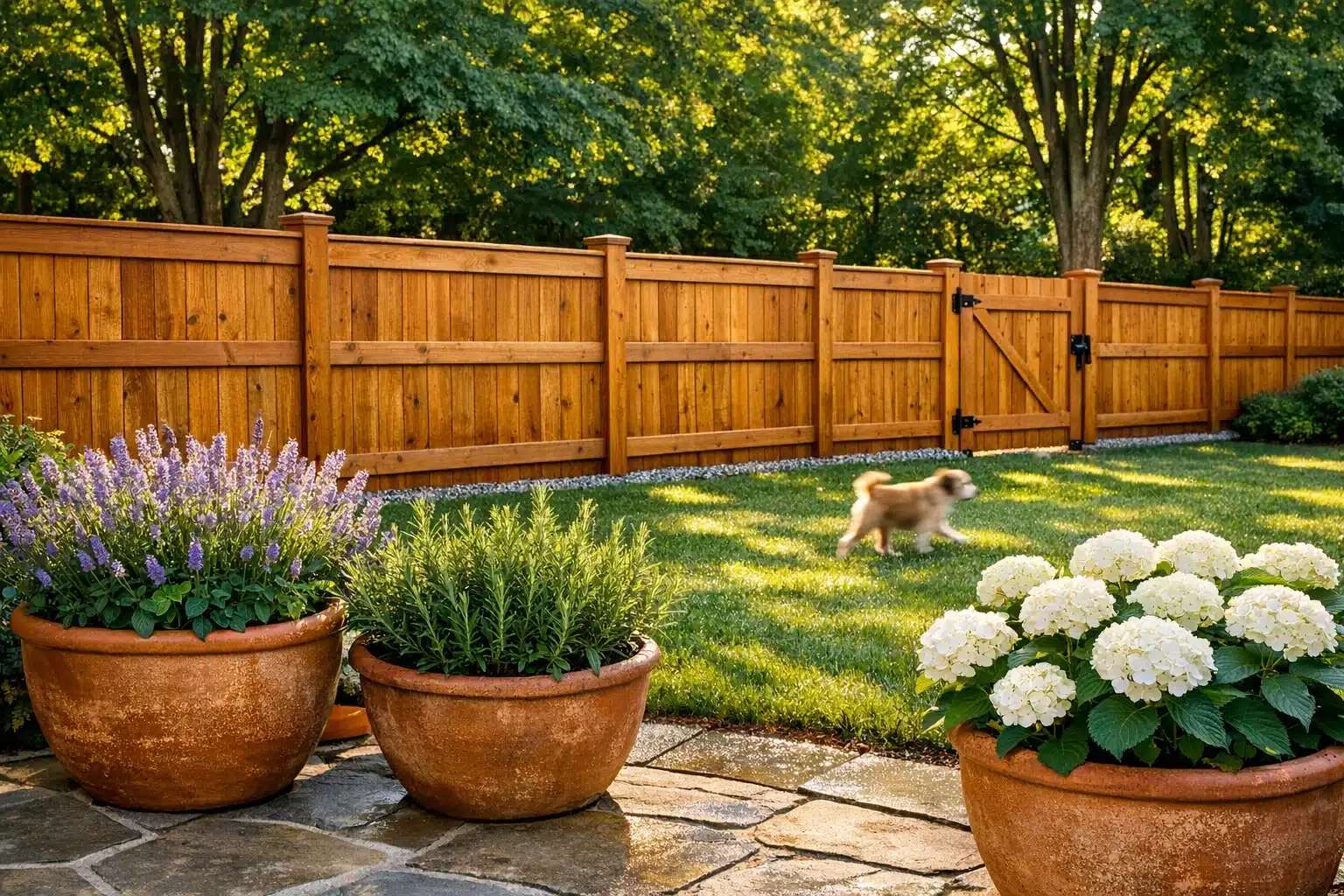
Backyard fence repair deserves its own discussion because the backyard is rarely just empty perimeter space. It is where children play, dogs patrol with great seriousness, gardens creep outward, grills smoke on weekends, and neighbors share a boundary that matters more than anyone admits. A repair in this area is not only about restoring a barrier; it is also about preserving privacy, security, and the way the yard functions day to day.
One of the first backyard-specific concerns is sightline. A front or side fence may be more decorative, but a backyard fence often blocks views into patios, windows, and outdoor seating areas. That means missing boards, gaps, or uneven panel heights are more noticeable. Homeowners may be tempted to replace only the visibly broken pieces, yet a patched section that does not align properly can leave awkward openings or a jagged appearance. When privacy is the goal, consistent height and spacing matter almost as much as structural integrity.
Drainage is another major factor. Backyard fences commonly fail near low spots where water collects after irrigation or rain. Posts set in consistently wet soil can loosen, tilt, or rot faster than those in drier ground. If a fence has started leaning in one area repeatedly, the real issue may be grading rather than carpentry. In those cases, a successful backyard fence repair may include adjusting soil slope, extending downspouts, relocating sprinklers, or adding gravel to reduce moisture around the post base.
Homeowners should also think about usage patterns. Gates in the backyard handle more wear than many people realize, especially when they serve as the path for lawn equipment, trash bins, bicycles, or pool access. If the gate is dragging or misaligned, the problem may not be the gate alone. The hinge post could be shifting under repeated load. Fixing only the latch hardware may buy a little time, but it will not correct the underlying movement.
Before any repair that involves digging, it is wise to confirm property boundaries and check local requirements. In some areas, fence height, setbacks, and shared boundary responsibilities are regulated. If the fence is near a property line, a brief conversation with the neighbor can prevent confusion later. It is also important to identify buried utilities before setting or replacing posts.
A practical backyard repair workflow often looks like this:
- Inspect posts, rails, panels, and gates from end to end
- Identify water issues, slope changes, and root pressure
- Confirm boundary lines and local rules if the repair is substantial
- Separate cosmetic issues from structural failures
- Repair the support system first, then the visible boards or panels
Backyard repairs succeed when they respect how the yard actually works. A fence should not only stand upright on installation day; it should continue to handle weather, traffic, pets, and privacy needs through every season. That practical perspective is what keeps a repair from becoming a recurring chore.
When to Hire a Fence Repair Service Instead of Doing It Yourself
DIY fence repair can be satisfying, especially for small jobs like replacing a few pickets, tightening loose hardware, or repainting a worn section. Many homeowners enjoy solving a visible problem with basic tools and a free weekend. Still, there is a clear line between a manageable repair and a job that deserves a professional fence repair service. Knowing where that line sits can save money, reduce risk, and prevent a simple project from turning into a prolonged lesson in frustration.
A professional service is especially valuable when posts are failing. Post replacement often requires digging through compacted soil, removing old concrete, setting new footings at proper depth, and aligning the fence so it remains straight across multiple sections. That process is more demanding than replacing boards. If the layout includes slopes, retaining walls, tight access, or mature landscaping, the difficulty rises quickly. Storm damage can create another layer of complexity when several sections are leaning at once and hardware has twisted under force.
Hiring a fence repair service also makes sense when material matching is difficult. Vinyl systems, ornamental metal panels, and some composite products rely on specific components. Professionals often have supplier relationships or enough experience to identify compatible parts. They can also evaluate whether a repair will look cohesive or whether a heavily weathered fence will make new sections stand out sharply.
When comparing service providers, ask practical questions rather than focusing only on the lowest price. Helpful questions include:
- What exactly is included in the quote: labor, materials, hauling, disposal, and staining or painting?
- Will damaged posts be replaced or simply braced temporarily?
- How will the crew protect nearby landscaping, irrigation lines, or hardscaping?
- Is there proof of insurance and any workmanship warranty?
- What is the expected timeline, and what delays are most common?
Quote quality matters. A strong estimate usually describes the repair scope clearly, identifies material assumptions, and explains whether color matching may vary. A vague one-line price can lead to surprises later. Homeowners should be cautious if a contractor pushes for immediate commitment, avoids written details, or suggests skipping local requirements. Those are not clever shortcuts; they are red flags.
There is also a financial angle that people sometimes overlook. A do-it-yourself attempt may appear cheaper until tool purchases, material waste, extra trips, and rework are added up. For example, resetting one leaning post might seem simple, but if the repair ends with misaligned rails and a gate that no longer closes, the original savings can disappear. Professional work is not automatically the best choice, yet it can be more efficient when precision matters.
A good fence repair service does more than replace broken parts. It diagnoses why the damage happened, restores the structure, and helps reduce the chance of the same failure returning next season. For homeowners dealing with backyard fence repair near property lines, pools, pets, or heavy gate use, that expertise can be worth far more than the labor alone.
Cost Planning, Preventive Maintenance, and the Best Next Step for Homeowners
Fence repair decisions usually come down to three questions: how serious is the damage, how long do you need the fix to last, and what budget makes sense for the property? The answers differ from one yard to another, but a little cost planning goes a long way. Small repairs such as replacing a handful of wood pickets or tightening hardware may involve modest material costs if tools are already on hand. Once posts, concrete footings, gates, or multiple panels are involved, labor and disposal can become the larger share of the price.
Regional pricing varies, but homeowners can still use broad comparisons. Minor chain-link fixes or small wood repairs may fall into a relatively low range, while replacing a damaged panel, resetting a post, or correcting a sagging gate generally costs more because alignment matters. Repairs that require custom fabrication, exact vinyl matching, or difficult site access usually rise further. If several areas are failing at once, asking for both a repair quote and a partial replacement quote can be wise. Sometimes the numbers are closer than expected, especially on aging fences with repeated trouble spots.
Preventive maintenance is what stretches the value of any repair. A fence does not need constant attention, but it does benefit from a routine check at least once or twice a year, plus an inspection after major storms. Smart upkeep habits include:
- Keeping soil, mulch, and sprinkler spray from staying against wood boards
- Cleaning debris from the base of the fence so moisture does not linger
- Touching up paint or protective coatings where finishes are scratched
- Tightening hinges, latches, and exposed fasteners before movement worsens
- Trimming vines or heavy shrubs that trap dampness and hide damage
Seasonality matters too. Dry, moderate weather is often best for staining, sealing, and many repair tasks, while saturated winter soil can complicate post work. That does not mean urgent repairs should wait, only that planning ahead can improve both efficiency and finish quality. If you know a backyard fence has one weak section, fixing it before storm season is usually cheaper than rebuilding it afterward.
For homeowners, the best next move is usually the one that matches the real condition of the fence instead of the wish that it might somehow hold out one more year. If the damage is isolated and the structure is otherwise healthy, a focused repair is practical. If the fence is leaning in several places, draining poorly, and showing age across the full run, broader work may be the smarter investment. The goal is not perfection for its own sake. It is a safe, durable boundary that protects privacy, supports everyday use, and makes the backyard feel finished again. That is the standard worth repairing toward.