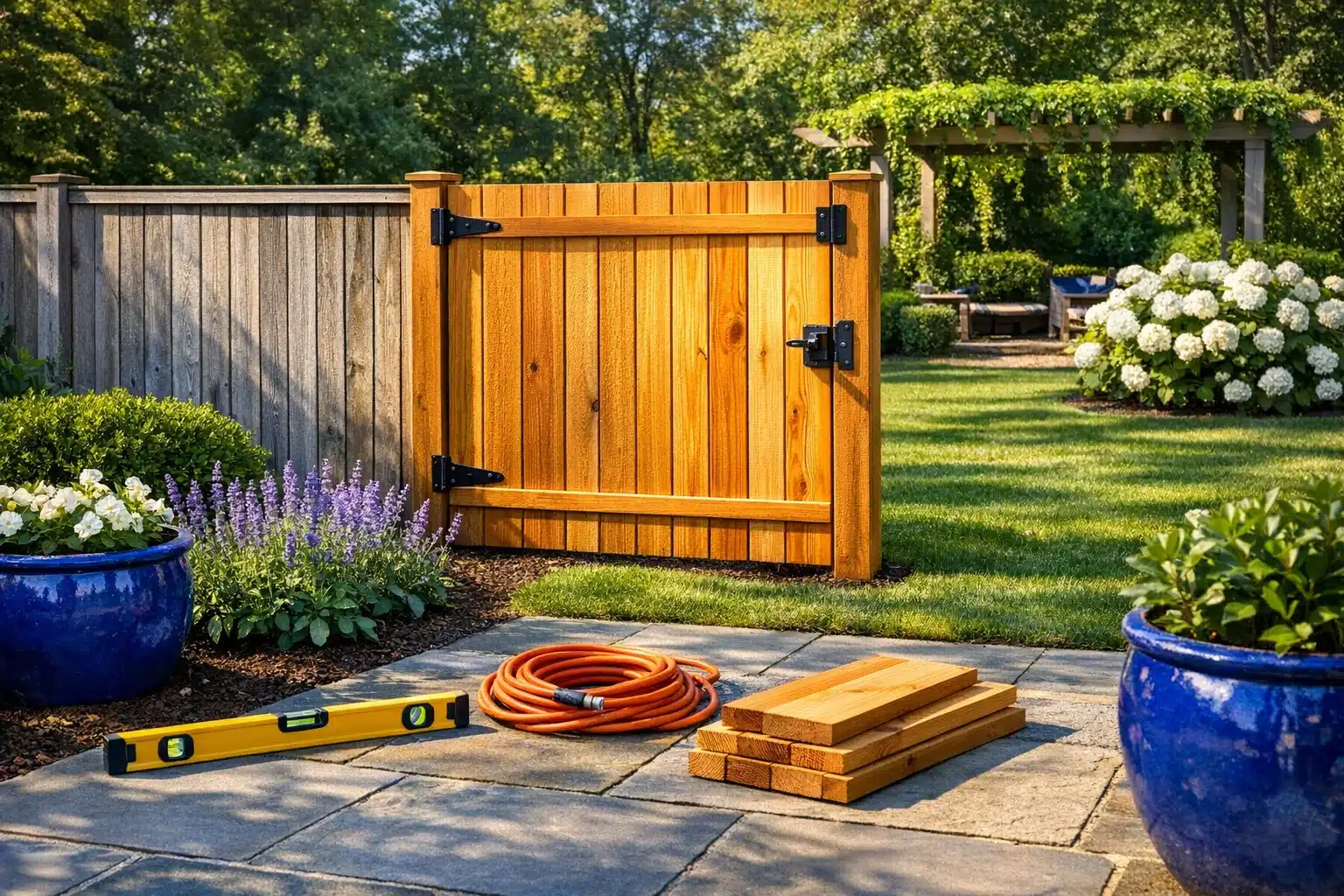
Wood Fence Repair: Backyard Fence Repair and Service Guide
A wood fence does more than trace a property line; it shapes privacy, security, curb appeal, and the whole mood of a backyard. When pickets loosen, posts tilt, or a gate scrapes the ground, minor wear can become structural damage faster than many homeowners expect. This guide explains how to approach wood fence repair, handle common backyard fence problems, and judge when a fence repair service is the smarter choice for time, cost, and long-term durability.
1. Start with an Outline: How to Inspect Damage and Build a Repair Plan
Before anyone swings a hammer or buys replacement boards, the smartest first move is a calm inspection. Fence problems often look dramatic from a distance, yet many are localized and fixable. A single leaning section may come from one failing post. A gate that will not latch may be caused by sagging hinges rather than widespread frame damage. Good repair begins with diagnosis, and diagnosis begins with walking the fence line slowly, checking each component the way a contractor would.
A practical outline for wood fence repair usually follows this order:
- Inspect posts, rails, pickets, and gates
- Identify cosmetic issues versus structural issues
- Measure damaged sections and note materials
- Check moisture exposure, soil movement, and drainage
- Decide whether to repair, reinforce, or replace
- Set a budget for materials, tools, and labor
Posts are the backbone of the fence, so start there. Push gently against each one. If a post shifts at ground level, rot or loose footing may be present. Rails come next; cracked or detached rails often cause pickets to bow or detach. Then look at the individual boards. Warped, split, or insect-damaged pickets may affect appearance more than strength, but clusters of failures can signal deeper water exposure. Gates deserve their own check because they carry moving weight every day. Misalignment, hinge pullout, latch failure, and frame twist are common.
Weather leaves clues. Dark staining near the bottom of boards can point to splash-back from soil or lawn irrigation. Rusted fasteners may suggest long-term moisture retention. In colder climates, freeze-thaw cycles can loosen posts and widen cracks. In hot regions, repeated drying can make wood brittle and cause shrinkage around screws and nails. The fence, in a sense, tells its own story if you know how to read it.
At this stage, comparison matters. Repairing a few pickets is a quick task; replacing a rotten post set in concrete is more demanding. Fixing a gate hinge is usually cheaper than rebuilding a gate frame. If over 20 to 25 percent of the fence has major decay, many homeowners begin to compare extensive repair costs against partial reconstruction. This early outline helps prevent wasted money, duplicate labor, and the classic weekend mistake of replacing visible pieces while ignoring the actual structural cause underneath.
2. Wood Fence Repair Methods: From Loose Pickets to Failed Posts
Wood fence repair covers a wide range of jobs, and the right method depends on which part has failed. Some repairs are light and tidy, like replacing a split picket. Others involve digging, bracing, and resetting support members. The goal is not simply to make the fence look better for a month; it is to restore stability while extending the life of the remaining structure.
The most straightforward repair is replacing damaged pickets or boards. If the fence rails and posts are still sound, individual boards can usually be removed and swapped without disturbing the rest of the section. Matching dimensions matters. A new picket that is slightly wider, thinner, or taller than the existing run will stand out visually and can create uneven fastener spacing. Cedar, pine, and redwood each behave differently outdoors. Cedar is naturally more rot resistant, pressure-treated pine is budget friendly and widely available, and redwood is attractive but often costs more. Choosing a replacement that matches the original species, or at least the same thickness and finish profile, improves the result.
Rail repair is the next level up. Horizontal rails often crack near fasteners or pull away from posts after repeated wind load. In some cases, a rail bracket can reinforce the connection. In others, the rail should be replaced entirely. If more than one rail in the same panel has failed, the section may need to be disassembled and rebuilt. Nails may be quicker to install, but exterior-grade screws often provide better holding power during repair work, especially in wood that has expanded and contracted for years.
Post repair is usually the most important and the most labor-intensive task. A leaning post may be caused by rot, shallow installation, poor concrete footing, or shifting soil. Surface braces can temporarily improve alignment, but a badly compromised post typically needs replacement. That means removing attached rails, extracting the old footing if necessary, setting a new treated post plumb, and allowing concrete to cure before reconnecting the fence. For a six-foot privacy fence, post depth is commonly around one-third of the post length, though local soil conditions and frost depth matter.
Gate repairs combine carpentry and geometry. A gate sags because gravity is patient and relentless. Tightening hinges may help, but if the frame has twisted, a diagonal anti-sag brace or a rebuilt frame may be required. Latches should align cleanly without forcing the gate upward. If the gate scrapes the ground, the issue may be hinge movement, post lean, or both.
Useful repair priorities often look like this:
- Replace failed posts before replacing surrounding boards
- Repair rails before attaching new pickets
- Correct gate alignment before installing new latch hardware
- Seal or stain repaired wood after it has dried properly
In many cases, the difference between a short-lived patch and a durable repair lies in sequence. Strong fences are rebuilt from the support structure outward, not from the surface inward.
3. Backyard Fence Repair: Site Conditions, Privacy Needs, and Everyday Wear
Backyard fence repair has its own personality. A fence around the rear of a property does not just sit there looking decorative; it works hard. It shields family space, frames gardens, manages pet boundaries, blocks wind, supports vines, and absorbs years of balls, bikes, sprinklers, and shifting ground. Because of that constant exposure, backyard damage is often shaped as much by the site as by the fence material itself.
Moisture is one of the biggest backyard enemies. Sprinkler systems that hit the same boards every morning can shorten the life of wood near grade. Mulch piled against pickets traps dampness. Dense shrubs reduce airflow and keep lower sections wet after rain. If a fence backs onto a slope, runoff may wash soil away from posts on one side while keeping the other side saturated. These conditions help explain why one panel ages gracefully while the next looks tired and crooked. A repair that ignores drainage usually solves the symptom, not the cause.
Backyards also create usage patterns that front-yard fences rarely face. Gates open more often. Children lean bikes against rails. Dogs jump, scratch, or push against lower boards. Outdoor furniture gets moved around and clipped against corners. In entertainment-heavy yards, fences near patios can suffer smoke staining, accidental impact, or heat exposure from grills and fire features placed too close. The result is a mixed repair picture: one section may need structural work, while another needs only cosmetic attention.
Privacy is another major factor in backyard repairs. Homeowners often care deeply about appearance because the fence forms the backdrop to decks, seating areas, and garden beds. A quick fix using mismatched lumber can feel like a patch on the living room wall. In those settings, comparison matters. Replacing one faded board with a fresh untreated board may be functional but visually obvious. Some people choose to repair the structure and then clean, stain, or seal the full run so the fence looks cohesive again.
Useful backyard-specific checks include:
- Look for sprinkler overspray and standing water near posts
- Inspect the bottom six to twelve inches of boards for rot
- Check for tree roots lifting concrete footings or shifting alignment
- Examine gate paths for drag marks caused by settlement
- Review neighbor-side access before planning major work
There is also the human side of the matter. Backyard fences often sit on shared lines, which means repairs may involve a conversation with a neighbor about access, style matching, or responsibility. Local codes or homeowners association rules may affect height, setbacks, and finish colors. Taking a little time to understand these limits can prevent the awkward moment when a repaired section looks perfect but violates a neighborhood rule.
When backyard fence repair is done well, the payoff is more than structural. The space feels finished again. The dog stays in, the view feels private, and the yard regains that quiet sense of enclosure that makes outdoor living more comfortable.
4. When to Hire a Fence Repair Service and What to Expect
Not every fence problem demands professional help, but many do. A homeowner with basic tools can often replace a few boards, install new screws, or refresh hardware. Once the job involves multiple posts, concrete removal, major alignment work, or a long run of storm damage, a fence repair service becomes a serious option. The question is not only, “Can I do this?” but also, “Will my repair hold up, look right, and justify the time I invest?”
A professional service usually starts with a site assessment. The contractor checks post stability, wood condition, gate function, terrain, drainage, and access. Good companies explain which components can be saved and which should be replaced. They may also point out hidden issues, such as rot inside a post that still appears solid from the outside, or rails fastened in a way that puts extra strain on neighboring sections. That diagnostic value is one reason many homeowners hire help even when the visible damage seems limited.
Typical services can include:
- Replacing broken pickets, rails, and posts
- Resetting leaning sections
- Repairing or rebuilding gates
- Correcting hardware failure and latch problems
- Cleaning, sealing, or staining after structural work
- Removing debris and disposing of damaged material
Cost varies widely by region, wood type, access, fence height, and the number of damaged sections. In many markets, a small repair such as replacing several boards or fixing basic hardware may fall in the low hundreds of dollars, while post replacement, gate rebuilding, or long-section reconstruction can climb much higher. The most accurate price comes from an in-person estimate because hidden conditions matter. A post set near tree roots is not the same job as one in open soil. A backyard with narrow access can require more labor than a side yard with easy equipment entry.
Choosing a service deserves the same care as choosing the repair itself. Look for clear written estimates, insurance coverage, reasonable timelines, and explanations of material choices. Ask whether the company uses pressure-treated posts, exterior-rated fasteners, and stain or sealant compatible with the wood species. A reliable contractor should be comfortable discussing why one repair method is preferable to another. Vague promises are less useful than practical details.
It also helps to compare repair with replacement honestly. If a fence has widespread post rot, extensive insect damage, or repeated storm failure, a service may recommend rebuilding part of the line rather than patching it repeatedly. That advice is not automatically upselling; sometimes it is the most economical path over five to ten years. On the other hand, if the frame is solid and only a handful of boards are worn, targeted repair can be the sensible answer.
The best fence repair service does more than restore appearance. It solves the reason the fence failed, leaves the site safe and clean, and gives the homeowner confidence that the next strong wind will not turn a small weak spot into a larger problem.
5. Conclusion for Homeowners: Repair Smart, Maintain Consistently, and Protect the Backyard
For homeowners, the most useful lesson is simple: fence repair works best when it is timely, targeted, and realistic. A wood fence does not need perfection to perform well, but it does need attention before minor defects spread. One loose picket may be cosmetic. One leaning post may be a warning. A dragging gate may be the first visible clue that soil movement or hardware fatigue is developing behind the scenes. Acting early usually costs less and preserves more of the original structure.
Wood remains a popular fencing material because it looks natural, suits many home styles, and can often be repaired section by section instead of replaced all at once. That flexibility is valuable. It allows homeowners to spend money where it matters most, whether that means replacing two rotten posts, rebuilding a gate, or refreshing a tired backyard boundary that still has good bones. Compared with ignoring the problem, even modest repairs can improve safety, privacy, and curb appeal. Compared with full replacement, careful repair may stretch the service life of the fence by several years.
A smart maintenance rhythm reduces future repair costs. At least once or twice a year, walk the fence after heavy weather and again during a dry period. Look for movement, fastener corrosion, cracks, insect activity, and moisture buildup near grade. Trim plants back so air can circulate. Redirect sprinklers if they soak the same boards daily. Clean dirt and debris from the base of the fence. Reapply stain or sealant as needed for the wood type and climate. These habits are not dramatic, but they are effective.
A simple homeowner checklist can keep the fence in better shape:
- Inspect posts and gates every season
- Replace failed hardware before it tears surrounding wood
- Keep soil, mulch, and standing water away from the base
- Match repair materials as closely as possible for strength and appearance
- Call a fence repair service when structural work exceeds your tools or experience
If your backyard fence is leaning, aging, or simply looking worn after years of service, the situation is rarely hopeless. Most problems follow patterns, and patterns can be repaired with the right plan. Whether you take the do-it-yourself route or hire a qualified fence repair service, the goal is the same: restore function, improve durability, and make the yard feel secure and complete again. A well-repaired fence may not demand applause, yet every time the gate closes smoothly and the boundary stands straight, it quietly proves its worth.